In My Cowboy Era: A Designer’s Review
When I pull a new machine embroidery design into my hoop, I am not just looking at pixels on a screen. I am visualizing the tension of the thread, the bite of the needle, and how the final texture will feel against skin or fabric. Today, I am putting the In My Cowboy Era Groovy Retro T-shirt design through its paces. As an experienced designer who frequently creates assets for Etsy sellers, small shop products, and personal client work, I look for more than just aesthetic appeal. I need to know if this embroidery file holds up under real-world stitching conditions.
The title suggests a specific vibe: a blend of western heritage and 1970s psychedelic aesthetics. This is a bold combination. In the world of T-Shirt Designs and Graphics, mixing retro groovy fonts with cowboy imagery can easily tip into kitsch if not executed with precision. My goal here is to determine if this design strikes the right balance between nostalgia and professionalism, making it suitable for everything from a quick craft fair project to a high-end boutique item.
First Impressions: Mood and Visual Personality
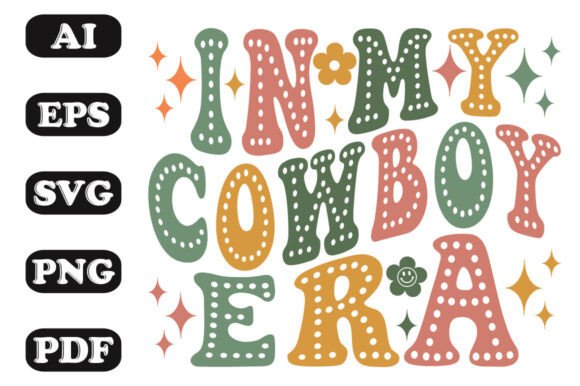
At first glance, the In My Cowboy Era Groovy Retro T-shirt design commands attention. It does not whisper; it shouts with a vintage flair. The "groovy" aspect implies wavy lines, distorted typography, or perhaps a sunburst background, while the "cowboy era" grounds it in rugged Americana. For a designer, this duality is both a gift and a challenge.
The mood created is one of playful confidence. It feels like something you would wear to a music festival or a themed party, but it also has the potential to be a sophisticated statement piece on a heavy cotton sweatshirt. The layout appears balanced, avoiding the cluttered look that plagues many low-quality digital downloads. This is crucial because when we convert a graphic into stitches, every extra line adds complexity. If the original design assets are clean, the resulting finished product will look crisp. If they are messy, the embroidery machine will struggle to resolve the details, leading to a tangled mess that no amount of trimming can fix.
I appreciate that this design leans into a specific niche. It is not trying to be everything to everyone. This focus makes it easier to market. For an Etsy seller, targeting customers who love "boho western" or "retro country" styles allows for very precise keyword optimization and audience engagement. The visual personality is distinct, which helps build brand consistency for handmade businesses.
Real-World Application: Where Does This Fit?
To truly evaluate any embroidery project, I have to imagine it on actual garments. Let’s take a scenario: I am preparing a batch of custom apparel for a local craft fair. I want to create a line of personalized gifts that feel unique but are easy to produce efficiently.
This graphics file works exceptionally well on structured items. I immediately pictured this stitched onto a heavyweight unisex sweatshirt. The retro theme pairs perfectly with thick cotton blends, where the thread can sit proud and textured without sinking into the weave. The contrast between the soft fabric and the defined stitches of the satin stitch elements would create a tactile experience that customers love. It elevates a simple garment into a handmade product with perceived value.
However, let’s consider other applications. Could this work on a tote bag? Absolutely. A canvas tote featuring the In My Cowboy Era motif would make a fantastic promotional item or a trendy accessory for young adults. The durability of canvas supports the density often required by such designs. What about baby clothes? This is where caution is needed. While cute, the "groovy" style might be too busy for delicate infant wear unless scaled down significantly. On a onesie, small details might get lost or cause irritation if the back of the embroidery is not properly stabilized.
I also see potential in accessories. An embroidered patch version of this design could be applied to denim jackets or backpacks. The circular or badge-style layouts common in retro designs often translate well to patches. Similarly, for holiday embroidery, this could serve as a fun, non-traditional Christmas gift for someone who loves a quirky sense of humor.
Technical Performance and Stitching Considerations
As a reviewer, I must address the technical side. How does this digital embroidery file behave during execution? The success of any custom apparel depends heavily on stitch density and placement.
- Stitch Density: Retro designs often feature thick fill stitches for backgrounds or large text. If the stitch density is too high, the fabric may pucker, especially on lighter materials. Before committing to a full production run, I always advise testing the design on scrap fabric to check for puckering. If the fabric distorts, you may need to adjust the stabilizer or reduce the density in your software.
- Satin Stitch Quality: Text outlines typically use satin stitches. On a groovy font, these curves must be smooth. If the angle changes are too sharp, the machine may leave unsightly gaps or bird’s nests. Inspect the vector paths of the original AI file if possible to ensure the curves are logical.
- Running Stitch Details: Any decorative accents or fine lines will likely use running stitches. These are fragile. If placed near the edge of a garment or on a stretchy fabric, they may break during washing. Ensure these details are robust enough for the intended use.
One critical factor is the choice of thread colors. The retro palette usually involves earth tones, mustard yellows, burnt oranges, or muted teals. Using the wrong thread color can completely ruin the mood. A bright neon green might clash with the "vintage" feel. Stick to high-quality polyester or rayon threads that have a slight sheen to enhance the retro vibe.
Where to Use With Caution
Not every surface is suitable for this design. There are specific scenarios where the In My Cowboy Era Groovy Retro T-shirt design might fail:
- Small Hoop Sizes: If the design is complex, forcing it into a small hoop can lead to overlapping errors or loss of detail. Always confirm the hoop size requirements before starting.
- Textured Fabrics: While linen or burlap looks great, their irregular surface can cause the needle to skip stitches or the thread to catch. Smooth fabrics like cotton, polyester, or fleece are safer bets for intricate details.
- Stretchy Fabrics: Knits require careful handling. Without proper tear-away or cut-away stabilizer, the design may distort as the fabric stretches. This is risky for t-shirts unless you are experienced with knit stabilization techniques.
- Dense Stitch Areas on Thin Fabric: Avoid placing dense fills on thin shirts or tea towels. The weight of the thread can cause the fabric to sag or tear over time.
Final Verdict: Is It Worth Adding to Your Library?
For designers looking to expand their catalog of design assets, the In My Cowboy Era Groovy Retro T-shirt offers a strong thematic foundation. It taps into current trends that favor nostalgia and individuality. The visual appeal is high, and when stitched correctly, it produces a finished product that feels premium and thoughtful.
I recommend this design primarily for commercial embroidery projects aimed at teens and young adults, as well as for personalized gifts that celebrate a free-spirited lifestyle. It works beautifully on sweatshirts, hoodies, and structured hats. However, always remember to test first. Check your stabilizer choices, verify your thread colors, and inspect the small details under good lighting.
If you are an Etsy seller or a craft business owner, this design has the potential to drive engagement. Its unique style stands out in a feed full of generic floral patterns. By presenting it on high-quality mockups and emphasizing the handmade care that goes into each stitch, you can build trust and recognition with your buyers. Just ensure you review the licensing terms included with the file to confirm you are allowed to sell finished items derived from it. When used responsibly and creatively, this design is a solid addition to any modern embroiderer’s toolkit.