Cowboy Boots: Simple Black and White Embroidery Design
As a designer who spends more time than I care to admit staring at stitch density charts and testing thread tension, I approach every new digital asset with a healthy dose of skepticism. The market is flooded with "unique" designs that fall apart under the needle or look muddy when stitched out. That is why reviewing The Drawing of Cowboy Boots is a Simple was such a refreshing experience. This isn’t just another clip-art vector slapped onto a hoop; it is a thoughtfully constructed illustration that understands the limitations and strengths of machine embroidery.
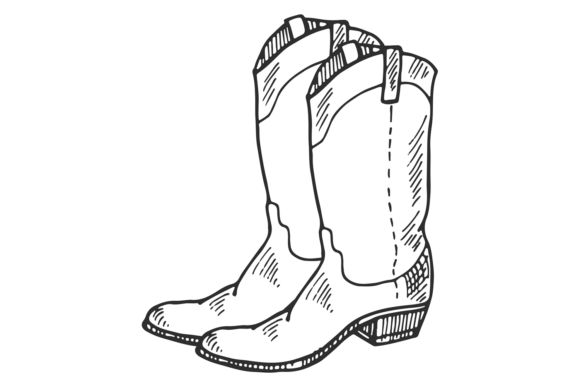
The core concept here is striking in its minimalism. The design features a close-up view of cowboy boots, rendered in a clean black-and-white aesthetic. They are positioned as if on display, giving them a gallery-like presence rather than a casual snapshot vibe. For an illustrator category product, this level of compositional intent is rare. It suggests that the creator understood that in embroidery, less is often more—provided the lines are confident and the negative space is respected.
First Impressions: Mood and Visual Personality
When you first load this file into your digitizing software, the immediate takeaway is clarity. The black-and-white contrast is not just a stylistic choice; it is a functional one for embroiderers. High-contrast line art translates beautifully to thread because it relies on distinct boundaries rather than subtle gradients that machines struggle to replicate. The mood created by The Drawing of Cowboy Boots is a Simple is one of grounded elegance. It feels rustic yet refined, making it versatile enough for a variety of branding identities.
The visual personality of the boots is strong. Because they are shown in a close-up view, the focus shifts entirely to the shape and silhouette of the footwear. There is no clutter, no background scenery, and no distracting elements. This allows the viewer’s eye to rest on the craftsmanship of the boot itself—the curve of the toe, the angle of the shaft. In a world where handmade products compete for attention on crowded social media feeds, this kind of focused, bold imagery stops the scroll. It communicates quality and intentionality before the customer even reads the product description.
Real-World Application: From Screen to Stitch
I recently put this design through its paces with a specific project in mind: a custom embroidered tote bag for a boutique client who sells artisanal leather goods. The goal was to create a piece that felt like part of the brand’s identity, not just a generic accessory. Here is how The Drawing of Cowboy Boots is a Simple performed in a real-life scenario.
Because the design is essentially a graphic illustration, it lends itself perfectly to applique techniques or clean satin stitch outlines. I tested it on a heavy-duty canvas tote. The clean lines held up exceptionally well, providing a sharp contrast against the textured fabric. The black-and-white theme allowed me to use standard black polyester thread without worrying about color bleeding or mismatched shades. The result was a finished product that looked professional, durable, and stylish. Customers at the craft fair immediately gravitated toward the tote, noting that the design felt "classic" and "timeless."
Beyond totes, this design has immense potential for other merchandise. Imagine this same boot illustration embroidered on the chest of a high-quality sweatshirt using white thread on a charcoal gray garment. The simplicity of the drawing ensures that it won’t overwhelm the wearer. It works equally well as a small patch on a denim jacket or as a central motif on a kitchen towel for someone who loves western aesthetics. The versatility of the graphics means it can be scaled up for large statement pieces or reduced down for smaller accents like baby onesies or caps, provided the hoop size allows for it.
Where Caution Is Required
While the design is robust, no embroidery file is universally perfect. There are specific situations where The Drawing of Cowboy Boots is a Simple requires careful consideration. If you plan to use this on a curved surface like a baseball cap or a beanie, you must ensure your hooping technique is secure. The close-up nature of the boots means that distortion on a curved seam could alter the intended perspective, making the boots look tilted or warped.
Additionally, while the design is simple, simplicity can sometimes mask detail issues. If you attempt to stitch this on a very thin or stretchy fabric without proper stabilizer support, the fabric may pucker around the dense areas of the stitching. The black-and-white contrast relies on clear edges; if the fabric texture is too coarse or the weave too loose, those crisp lines might blur during the stitching process. I always advise testing on scrap fabric first, especially if you are working with unusual materials like velvet, silk, or heavily distressed denim.
Another area to watch is small hoop sizes. While the design is scalable, reducing it too much can cause fine details to merge together. If you are aiming for a tiny decorative accent, make sure the smallest elements remain distinct. If the lines become too close, the machine may skip stitches or the thread may break. Always inspect the design at its final size in your software before committing to production.
Practical Designer Notes for Success
To get the most out of this machine embroidery design, follow these practical steps:
- Test on Scrap Fabric: Never assume a design will work perfectly on your final material. Test it on the exact fabric you plan to use to check for puckering, thread tension, and color contrast.
- Check Thread Colors: Although the design is black and white, the impact changes based on your thread choice. Use high-quality polyester or rayon threads to ensure the colors pop and resist fading after washing.
- Review Stitch Density: Look at the stitch density in your digitizing software. If the fill stitches are too dense, the fabric may become stiff. If they are too sparse, the backing may show through. Adjustments may be needed depending on your fabric type.
- Confirm Hoop Size: Ensure your hoop is large enough to accommodate the design without cutting off any parts of the boots. A centered placement usually looks best for this type of symmetrical or balanced composition.
- Inspect Small Details: Zoom in on the corners and curves of the boots. Are there any tiny isolated stitches that might be difficult to catch? These can lead to messy backings or thread breaks.
- Use Proper Stabilizer: For stable fabrics like cotton canvas, cut-away stabilizer is recommended for durability. For knits or stretchy fabrics, a combination of tear-away and cut-away may be necessary to prevent shifting.
- Compare Light and Dark Backgrounds: Since the design is monochromatic, test it on both light and dark fabrics. On dark fabrics, you may need to add a layer of white underlay or use white thread to ensure visibility.
- Check Licensing: Before selling finished products or digital assets, confirm the licensing terms. Some designs are for personal use only, while others allow commercial resale. Clear licensing protects your business from legal issues.
Final Verdict
The Drawing of Cowboy Boots is a Simple is a standout addition to any embroidery designer’s library. It combines artistic merit with technical practicality, making it suitable for everything from personalized gifts to commercial embroidery projects. Its clean, graphic style appeals to a broad audience, from country music fans to fashion-forward individuals who appreciate minimalist art. By understanding its strengths and respecting its limitations, you can create finished products that not only look great but also build trust and engagement with your customers. Whether you are an Etsy seller looking to expand your catalog or a hobbyist wanting to create unique home decor, this design offers a reliable, stylish foundation for your next creative endeavor.